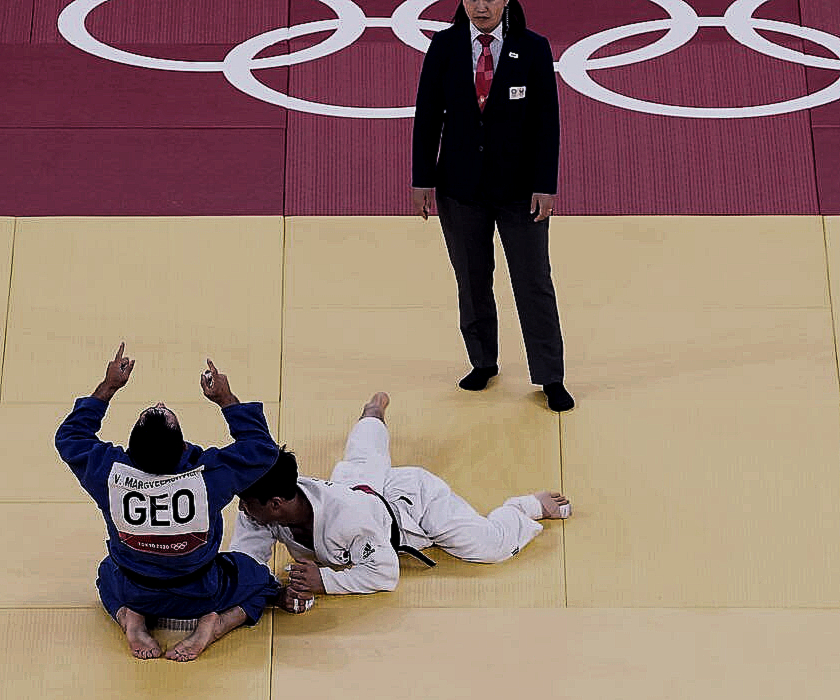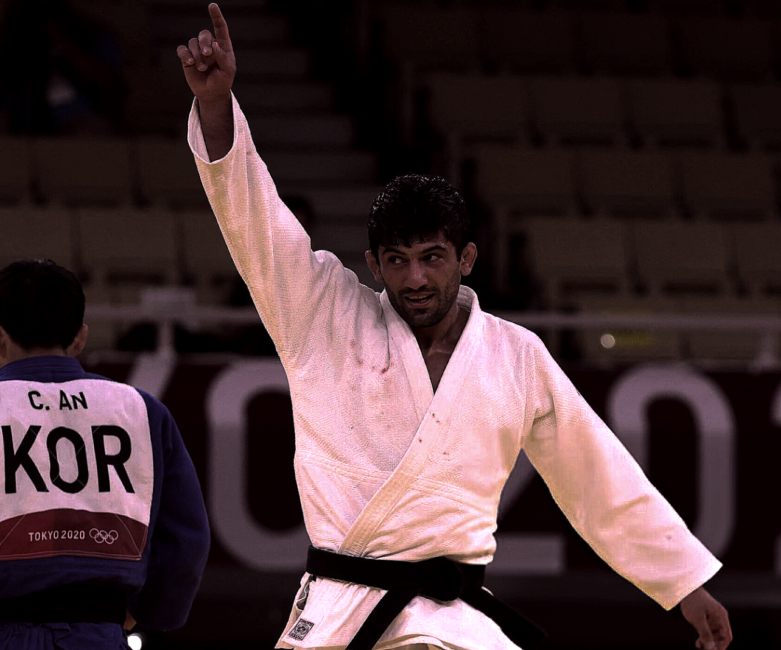



Judo (Japanese: 柔道) is an unarmed modern Japanese martial art,
combat sport, Olympic sport (since 1964), and the most prominent form
of jacket wrestling competed internationally Judo was created in 1882
by Kanō Jigorō (嘉納 治五郎) as an eclectic martial art,
distinguishing itself from its predecessors due to an emphasis on
"randori" (free sparring) instead of kata (kata, pre-arranged forms)
alongside its removal of striking and weapon training elements. Judo
rose to prominence for its dominance over established jujutsu schools
in tournaments hosted by the Tokyo Metropolitan Police Department
resulting in its adoption as the department's primary martial art. A
judo practitioner is called a "judoka" (柔道家, jūdōka, lit.'judo
performer'), and the judo uniform is called "judogi" (柔道着, jūdōgi,
lit.'judo attire').
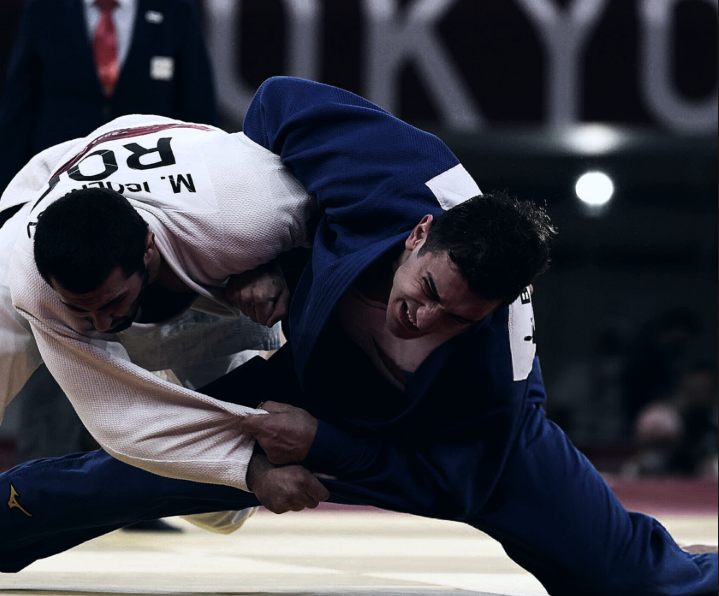
The objective of competitive judo is to throw an opponent, immobilize
them with a pin, or force an opponent to submit with a joint lock or a
choke. While strikes and use of weapons are included in some
pre-arranged forms (kata), they are not frequently trained and are
illegal in judo competition or free practice. Judo's international
governing body is the International Judo Federation, and competitors
compete in the international IJF professional circuit.
"Judo is not just about physical strength, it is also about inner
strength and self-discipline. It is a way of life that teaches you
to be humble, respectful, and courageous in the face of
adversity."
Georgian Judo is influenced by Chidaoba (Georgian cultural jacket
wrestling). Chidaoba's major influence on the Georgian style of judo
is in its unorthodox grips as well as its throws and takedowns.
Georgian Judo is also known for its countering techniques through the
use of power moves such as bear hugs and double underhooks into throws
and takedowns.
Mental training is an emerging modality of training in judo that aims
to improve the performance of high-performance athletes in training
and competition and also to promote health and well-being in the daily
life of athletes and their entourage through the learning and
application of psychological skills. The first publication of a
judo-specific practical mental training approach based on sports
training principles was in 2005 with the work of Boris Blumenstein,
Ronnie Lidor and Gershon Tenenbaum. In 2022, Caio Gabriel published
the first article on mental training that appeared in the scientific
journal of the International Judo Federation, "The Arts and Sciences
of Judo"